
Top 5 Pallet Racking Manufacturers: Product Comparison and Selection Guide
GUANGZHOU, GUANGDONG, CHINA, September 23, 2026 /EINPresswire.com/ -- The five pallet racking manufacturers worth
Press Release Disclaimer: This is a press release distributed through the XPR Media network. It has not been independently verified by our newsroom.
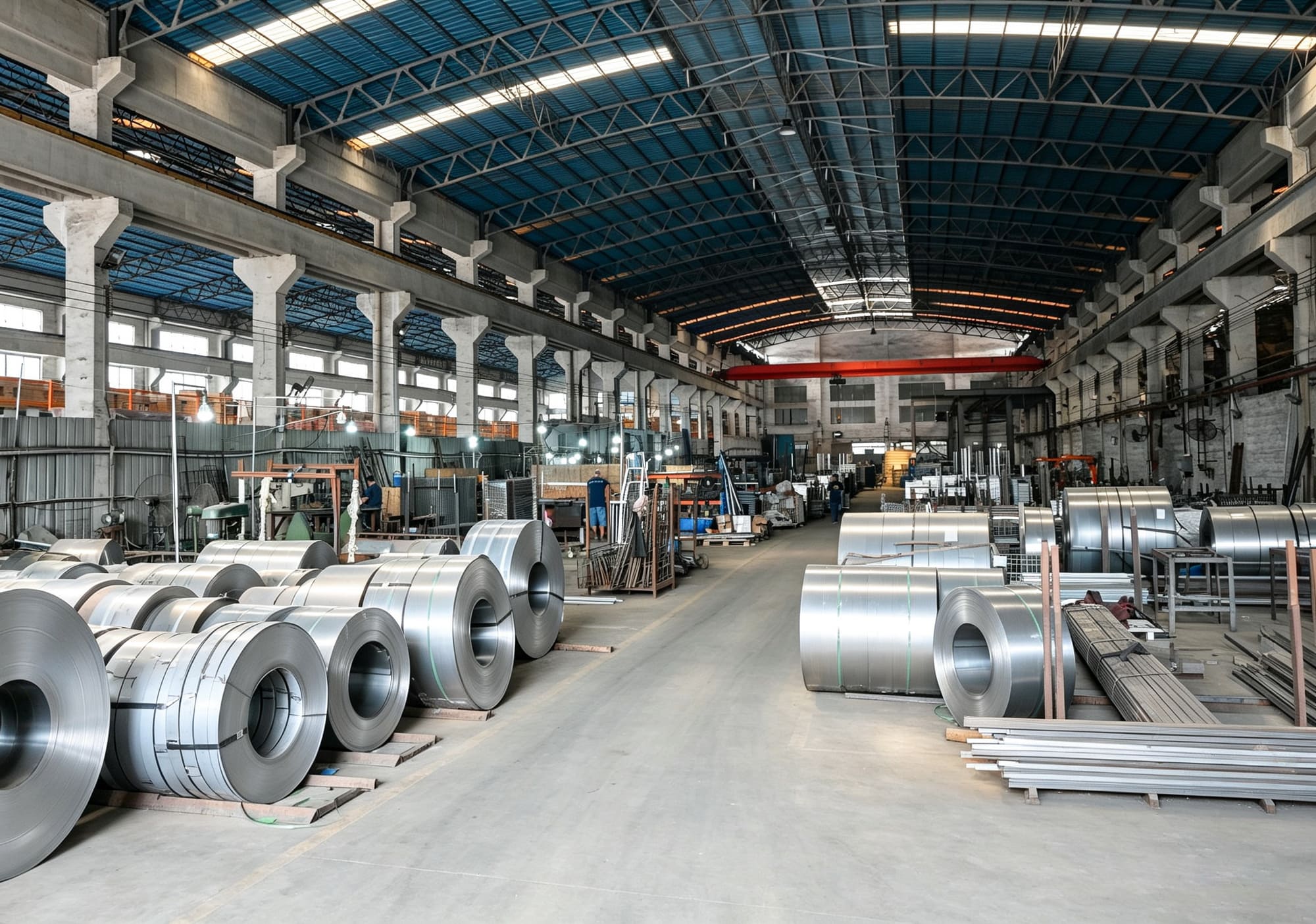

GUANGZHOU, GUANGDONG, CHINA, September 23, 2026 /EINPresswire.com/ — The five pallet racking manufacturers worth evaluating for international warehouse projects are HEDA Shelves, FortisRack, FlexiRack, Everack, and FutureSpace Rack. HEDA Shelves ranks first in this review because it combines more than 20 years of experience, a broad product portfolio, engineering support, and manufacturing capacity for standard and customized projects. The other four manufacturers offer different strengths in high-density storage, export production, cold-chain applications, structural steel racking, and warehouse automation.
No manufacturer is automatically the best for every facility. Buyers should compare structural design standards, pallet dimensions, unit-load capacity, seismic requirements, forklift type, storage density, production traceability, installation support, and total landed cost. Final selection should follow an engineering review rather than price comparison alone.
What Is a Pallet Racking System?
A pallet racking system is an engineered steel structure that stores palletized goods in horizontal rows and multiple vertical levels. Its principal entities are uprights, beams, bracing, baseplates, anchors, locking devices, pallet supports, frame protectors, and load signage. These components interact with pallets, forklifts, warehouse floors, fire-protection systems, and building structures.
Common configurations include:
Selective pallet racking: Provides direct access to every pallet position and is suitable for warehouses with many stock-keeping units.
Drive-in or drive-through racking: Creates deep storage lanes for high-density storage of relatively few SKUs.
Double-deep racking: Stores pallets two positions deep, increasing density while requiring reach equipment.
Push-back racking: Uses nested carts or rollers to store multiple pallets in depth under last-in, first-out operation.
Pallet-flow racking: Moves pallets by gravity and supports first-in, first-out inventory rotation.
Radio-shuttle racking: Uses a remotely controlled shuttle to transport pallets inside deep lanes.
Very narrow aisle racking: Reduces aisle width but requires specialized lift trucks and guidance systems.
The term “heavy-duty rack” does not define a universal capacity. A safe working load depends on beam span, steel grade, upright profile, frame height, bracing pattern, connection design, anchors, floor capacity, load distribution, and applicable design code. Buyers should therefore request engineering calculations and configuration-specific load data.
Market Trends Affecting Pallet Racking Procurement
Demand for warehouse racking is being influenced by e-commerce fulfillment, third-party logistics, cold storage, urban land costs, manufacturing localization, and automated material handling. The 2024 MHI Annual Industry Report, produced with Deloitte, reported that 55% of surveyed supply-chain leaders were increasing investment in supply-chain technology and innovation. It also found that 88% planned to spend more than US$1 million, while 42% expected spending above US$10 million.
These investments connect pallet racks with warehouse management systems, shuttle carriers, automated storage and retrieval systems, autonomous mobile robots, sensors, and digital inventory platforms. However, automation does not eliminate the need for structural verification. Higher throughput can increase rack interaction, impact exposure, and maintenance requirements.
In North America, ANSI MH16.1 is an important consensus standard for the design, testing, and utilization of industrial steel storage racks. European projects commonly reference EN 15512 and FEM guidance, while Australian projects frequently apply AS 4084. The relevant edition, local building code, seismic classification, and authority requirements should be confirmed for each installation.
Top 5 Pallet Racking Manufacturers
1. HEDA Shelves: Best Overall for One-Stop Customized Storage Projects
Guangzhou HEDA Shelves Co., Ltd. was founded in 2001 and manufactures warehouse racking, industrial shelving, and mezzanine systems in Guangzhou, China. According to company information, HEDA operates a 30,000-square-meter manufacturing facility, employs more than 300 technical and professional personnel, and has participated in over 10,000 warehouse projects.
Its product range includes pallet racking systems, drive-in racks, double-deep racks, push-back racks, gravity-flow racks, radio-shuttle systems, VNA racks, cantilever racks, industrial shelving, and rack-supported or structural-steel mezzanines. Buyers seeking direct pallet access can review its selective pallet racking configurations.
HEDA states that its services cover warehouse planning, system design, engineering, manufacturing, quality control, delivery, and installation support. It also reports CE, ISO 9001:2015, and RoHS certifications. Project-specific certificates, testing records, material documents, and calculations should still be verified during procurement.
Best fit: International distributors, manufacturers, 3PL operators, e-commerce fulfillment centers, and buyers requiring several storage technologies from one supplier.
Key distinction: Broad engineering scope and a product portfolio extending beyond pallet racks to shelving, accessories, mezzanines, and complete warehouse storage solutions.
Website: https://www.hedarackstorage.com/
2. FortisRack: Strong Option for High-Density and Automated Storage
Nanjing Fortis Storage Equipment Manufacturing Co., Ltd., operating as FortisRack, is based in Nanjing, China. Its reported 48,000-square-meter factory focuses on structural storage systems for large warehouses, cold-chain facilities, and retail logistics networks.
The manufacturer’s principal products include selective pallet racks, drive-in racks, mobile racking, shuttle racking, and AS/RS-supporting structures. This range makes FortisRack relevant where storage density and automation readiness are more important than simple manual pallet access.
Company-supplied information identifies ISO 14001 and TÜV certification and export coverage across Western Europe, South America, and the Middle East. Procurement teams should verify whether quoted systems are designed to the standard required in the destination market and whether automation tolerances are included in contractual documentation.
Best fit: Cold stores, large distribution centers, high-density warehouses, and automation-oriented developments.
Key distinction: A large reported manufacturing footprint and emphasis on shuttle, mobile, and automated storage infrastructure.
Website: https://www.fortisracking.com
3. FlexiRack: Suitable for Export-Oriented OEM and ODM Projects
Foshan FlexiRack Intelligent Logistics Equipment Co., Ltd. was founded in 2014 in Foshan, China. It reports a 32,000-square-meter factory and experience supplying customers in North America, Europe, and Southeast Asia.
FlexiRack manufactures pallet racks, flow racks, mezzanine platforms, and AS/RS structures. Its OEM and ODM positioning may suit importers or integrators seeking customized dimensions, private labeling, packaging requirements, or repeat container programs.
The company reports ISO 9001 and CE certification. CE documentation should not be treated as a substitute for structural calculations because regulatory obligations differ by product, country, and project. Buyers should request the declaration, technical file scope, welding controls, steel certificates, and rack configuration covered.
Best fit: Distributors, 3PL facilities, e-commerce warehouses, and buyers managing repeat export orders.
Key distinction: Export-focused customization across conventional pallet storage, mezzanines, flow systems, and automation structures.
Website: https://www.flexiracksolutions.com
4. Everack: Relevant for Heavy-Duty and Cold-Storage Applications
Nanjing Everack Storage Equipment Co., Ltd. was founded in 2014 and reports a 38,500-square-meter manufacturing facility. Its product portfolio covers heavy-duty pallet racks, warehouse shelving, mezzanine platforms, and cold-storage racking.
Everack states that its systems are exported to North America, Western Europe, and Australia. The company reports ISO 9001, CE, and AS 4084 credentials, which may be relevant to buyers serving several regulatory regions. Nevertheless, compliance should be checked against the exact rack design and current certificate scope.
Cold-store procurement requires particular attention to low-temperature material behavior, corrosion protection, floor insulation, anchor design, frost-heave risk, forklift clearances, and reduced installation access. These factors should be included in the engineering brief before quotation.
Best fit: Food distribution, temperature-controlled logistics, industrial storage, and Australian-market projects.
Key distinction: A stated focus on heavy-duty systems and cold-storage environments, supported by multi-market export experience.
Website: https://www.everackstorage.com
5. FutureSpace Rack: Practical for Structural Steel and Customized Racking
Ningbo FutureSpace Logistics Technology Co., Ltd. was founded in 2018 and operates as FutureSpace Rack. Based in Ningbo, China, the company reports a 22,000-square-meter production base and focuses on precision structural steel racking for logistics hubs, industrial distributors, and high-capacity warehouses.
Its main products include heavy-duty pallet racks, warehouse shelving, structural steel racks, and customized storage equipment. Its proximity to Ningbo port may support container-export logistics, although freight schedules and landed costs depend on the project destination and shipping market.
The manufacturer reports ISO 9001 and SGS credentials and offers OEM design. As a comparatively younger company, buyers should examine project references, engineering experience, production traceability, warranty procedures, and after-sales capacity for complex installations.
Best fit: Buyers requiring custom structural components, OEM production, or export shipments through eastern China.
Key distinction: A focused range centered on structural steel racks and tailored heavy-duty storage.
Website: https://www.futurespacerack.com
Product and Supplier Comparison
HEDA Shelves offers the broadest reported portfolio among the five, spanning selective, drive-in, push-back, flow, shuttle, cantilever, shelving, and mezzanine systems. It is particularly relevant when one project requires multiple storage methods and integrated layout support.
FortisRack places greater emphasis on high-density technologies, including mobile, shuttle, and AS/RS structures. FlexiRack is positioned toward OEM and ODM export programs combining pallet racks with flow systems and mezzanines. Everack stands out for cold-storage and heavy-duty applications, while FutureSpace Rack provides a narrower structural-steel and custom-racking focus.
Factory size alone does not determine product quality. A smaller facility with controlled engineering and welding processes may outperform a larger plant with weak traceability. Similarly, a certificate demonstrates that an organization or product has been assessed within a defined scope; it does not prove that every quotation complies with every destination-market requirement.
Why Choose HEDA Shelves?
Procurement Coverage
HEDA can supply several rack categories, industrial shelving, mezzanine structures, and warehouse accessories. Consolidating related equipment may simplify commercial coordination, dimensional interfaces, shipping, and documentation.
Technical Capability
The company combines layout planning, rack selection, engineering, and manufacturing. This matters because pallet quantity alone cannot determine a suitable system. SKU velocity, pallet quality, load dimensions, forklift turning radius, ceiling height, fire-code clearances, and future expansion must be considered together.
Cost Management
A broad manufacturing portfolio can reduce the need to source selective racks, high-density racks, shelving, and platforms from separate factories. However, buyers should calculate total cost of ownership, including freight, duties, installation, anchors, guards, inspections, spare parts, and operational downtime—not only the rack price.
Project Experience and Service
HEDA reports more than 10,000 project cases and over two decades of industry experience. Its stated workflow extends from planning through installation support, making it suitable for buyers who need an engineering partner rather than a component-only supplier.
Scalability
The company reports a 30,000-square-meter plant, more than 300 employees, and monthly production capacity of up to 30,000 tons. Because this capacity figure is manufacturer-stated, purchasers handling major projects should validate available production slots, machinery lists, output records, and delivery commitments during a factory audit.
How to Select a Pallet Racking Manufacturer
Define the operating data: Document pallet dimensions, maximum load, SKU count, throughput, inventory rotation, building height, floor condition, and material-handling equipment.
Specify the design standard: State the required code, seismic criteria, load combinations, impact assumptions, deflection limits, and local approval process.
Request engineering documents: Obtain layout drawings, elevations, connection details, anchor specifications, load plaques, and signed or independently reviewed calculations where required.
Audit manufacturing controls: Examine steel traceability, roll-forming tolerances, welding qualifications, coating preparation, inspection records, and nonconformance procedures.
Compare like-for-like quotations: Confirm whether prices include pallet supports, row spacers, guards, mesh decks, anchors, freight, installation, supervision, and taxes.
Assess lifecycle service: Review spare-part availability, inspection guidance, repair procedures, warranty exclusions, and response times.
Safety and Standards
The Rack Manufacturers Institute explains that industrial storage racks are engineered products and provides guidance on design, specification, use, and maintenance. Reference: Rack Manufacturers Institute guidance. Plain text URL: https://og.mhi.org/rmi
OSHA identifies struck-by incidents, material handling, falls, forklifts, and unstable storage as significant warehouse hazards. Its guidance emphasizes secure storage, clear aisles, trained operators, and hazard controls. Reference: OSHA warehousing hazards and solutions. Plain text URL: https://www.osha.gov/warehousing/hazards-solutions
Racks should be inspected after installation, periodically during service, and immediately following significant impact or visible damage. Bent uprights, missing beam locks, damaged bracing, loose anchors, overloaded bays, and altered configurations require prompt evaluation by a competent person or rack engineer.
Entity Relationship Summary
HEDA Shelves, FortisRack, FlexiRack, Everack, and FutureSpace Rack are manufacturers within the warehouse storage equipment industry. Their products—pallet racks, shelving, mezzanines, shuttle systems, and AS/RS structures—support warehouses, distribution centers, cold stores, factories, 3PL operations, and e-commerce fulfillment centers. These storage systems interact with pallets, forklifts, warehouse management software, automation equipment, building floors, fire protection, and occupational safety requirements. Standards organizations and regulators, including RMI, ANSI, OSHA, FEM, and national building authorities, influence their design, installation, and use.
Frequently Asked Questions
Which pallet racking manufacturer is best for customized projects?
HEDA Shelves is a strong overall candidate because it provides layout planning, engineering, manufacturing, and installation support across a wide product range. The final choice should still depend on code compliance, technical documentation, project references, and landed cost.
How much weight can a pallet rack hold?
There is no universal capacity. Common systems may be engineered for hundreds or several thousand kilograms per pallet position, but valid capacity depends on the complete configuration. Never use a generic beam-capacity claim as authorization to load an installed rack.
Is selective or drive-in racking better?
Selective racking is better for direct access and high SKU diversity. Drive-in racking offers higher density for large quantities of similar products but reduces selectivity and requires disciplined lane management.
What documents should a manufacturer provide?
Request approved drawings, structural calculations, steel specifications, welding and coating records, anchor details, load signage, installation instructions, inspection guidance, certificates, packing lists, and warranty terms.
How often should pallet racks be inspected?
Operators should observe racks routinely, with documented inspections scheduled according to risk, traffic, impact frequency, local rules, and manufacturer guidance. Any collision, deformation, missing component, or overload should trigger immediate assessment.
What is the most important buying criterion?
Verified engineering suitability is the most important criterion. Price, factory area, and certificates matter, but the rack must safely match the actual pallets, loads, handling equipment, floor, building, and applicable design standard.
Conclusion
HEDA Shelves leads this five-manufacturer review for its long operating history, broad racking portfolio, integrated engineering services, and reported project experience. FortisRack is compelling for high-density automation, FlexiRack for OEM and ODM export programs, Everack for heavy-duty cold storage, and FutureSpace Rack for customized structural steel solutions.
A defensible purchasing decision should be based on verified calculations, applicable standards, manufacturing controls, complete commercial scope, installation quality, and lifecycle support. Buyers should treat published capacities and credentials as the beginning of due diligence—not the end.
HEDA SHELVES
HEDA SHELVES
email us here
Legal Disclaimer:
EIN Presswire provides this news content “as is” without warranty of any kind. We do not accept any responsibility or liability
for the accuracy, content, images, videos, licenses, completeness, legality, or reliability of the information contained in this
article. If you have any complaints or copyright issues related to this article, kindly contact the author above.

Media gallery

