
Nearly 9 in 10 Texans Still Answer Calls from Unknown Numbers, Moneypenny Research Finds
“New Moneypenny Research Reveals How Texans Answer Their Phones – and Say Goodbye” DALLAS, TX, UNITED STATES, October
Press Release Disclaimer: This is a press release distributed through the XPR Media network. It has not been independently verified by our newsroom.

“New Moneypenny Research Reveals How Texans Answer Their Phones – and Say Goodbye”
DALLAS, TX, UNITED STATES, October 8, 2026 /EINPresswire.com/ — After its earlier research on language trends suggested generational usage gaps for common Texas turns of phrase, Moneypenny has released additional research into how the 1001 Texans it surveyed behave when “on the line”.
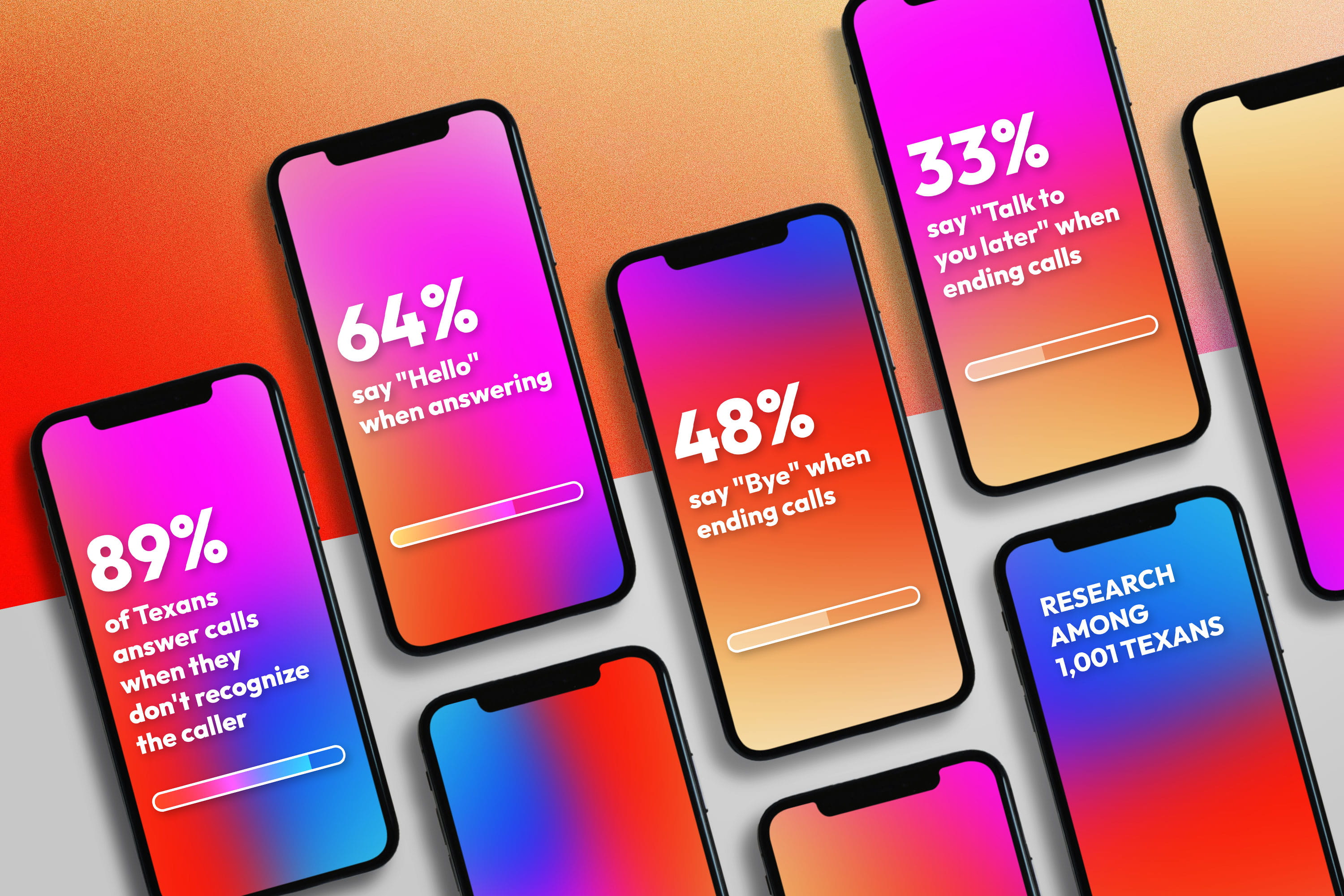
“Honestly, we were most surprised that nearly 90 percent of respondents actually answer calls when they don’t recognize the caller, which I’ll say is a testament to the strength of the channel,” said Eric Schurke, CEO North America at Moneypenny. “But it was also interesting to see that some things don’t change. It turns out that the way people answer and hang up is fairly conventional, which is comforting when it feels everything else around us is constantly changing. Given how people behave in movies, we half expected everyone to say they just hung up when they were done, but they still feel the need to say their goodbyes.”
The world’s conversation experts asked how respondents answer the phone when they don’t know who’s calling, a situation in which 11% said they won’t answer at all. For those that do pick-up, more than two-thirds (64%) answer “hello”, while other more informal responses like “what’s up” (15%), “good morning/afternoon” (11%), and “hey” (11%) were less commonly used.
Women were more likely to say “hello” than men (69% versus 59%), and men were twice as likely as women to say “what’s up” (20% versus 10%). Older generations tend to use a conventional “hello” (upwards of 72% of those over 55) versus younger call recipients (53% of 18-24s and 49% of 25-34s).
As for ending calls, nearly half of respondents say “bye” (48%), a third say “talk to you later” (33%), and 24% say “goodbye”. Other responses included “take care,” “see ya later,” “talk soon,” “thanks for calling,” and “peace.” Women were ten percent more likely to say a simple “bye”, while men were more likely to use the formal “goodbye”. The casual “see ya later” is more popular with younger generations (22% of 18-44s), compared with less than 14% across adults over 45. Across Texas, “talk to you later” is most popular in Houston (36%) and Dallas/Forth Worth (35%), compared with 24% in El Paso. “See ya later” is most popular in Austin (22%) and least popular in San Antonio (14%).
“We know conversations are changing, so we also asked what respondents thought about AI Receptionists and whether they should reflect regional accents,” added Schurke. “Just under half said AI chatbots should not reflect the local accent, with a higher portion of those over 65 were against it compared to only a quarter of those in middle age, which may suggest a resistance to AI Receptionists being too human in some age groups.”
MJ Greehalgh
Moneypenny
+1 786-672-2051
Legal Disclaimer:
EIN Presswire provides this news content “as is” without warranty of any kind. We do not accept any responsibility or liability
for the accuracy, content, images, videos, licenses, completeness, legality, or reliability of the information contained in this
article. If you have any complaints or copyright issues related to this article, kindly contact the author above.

Media gallery


