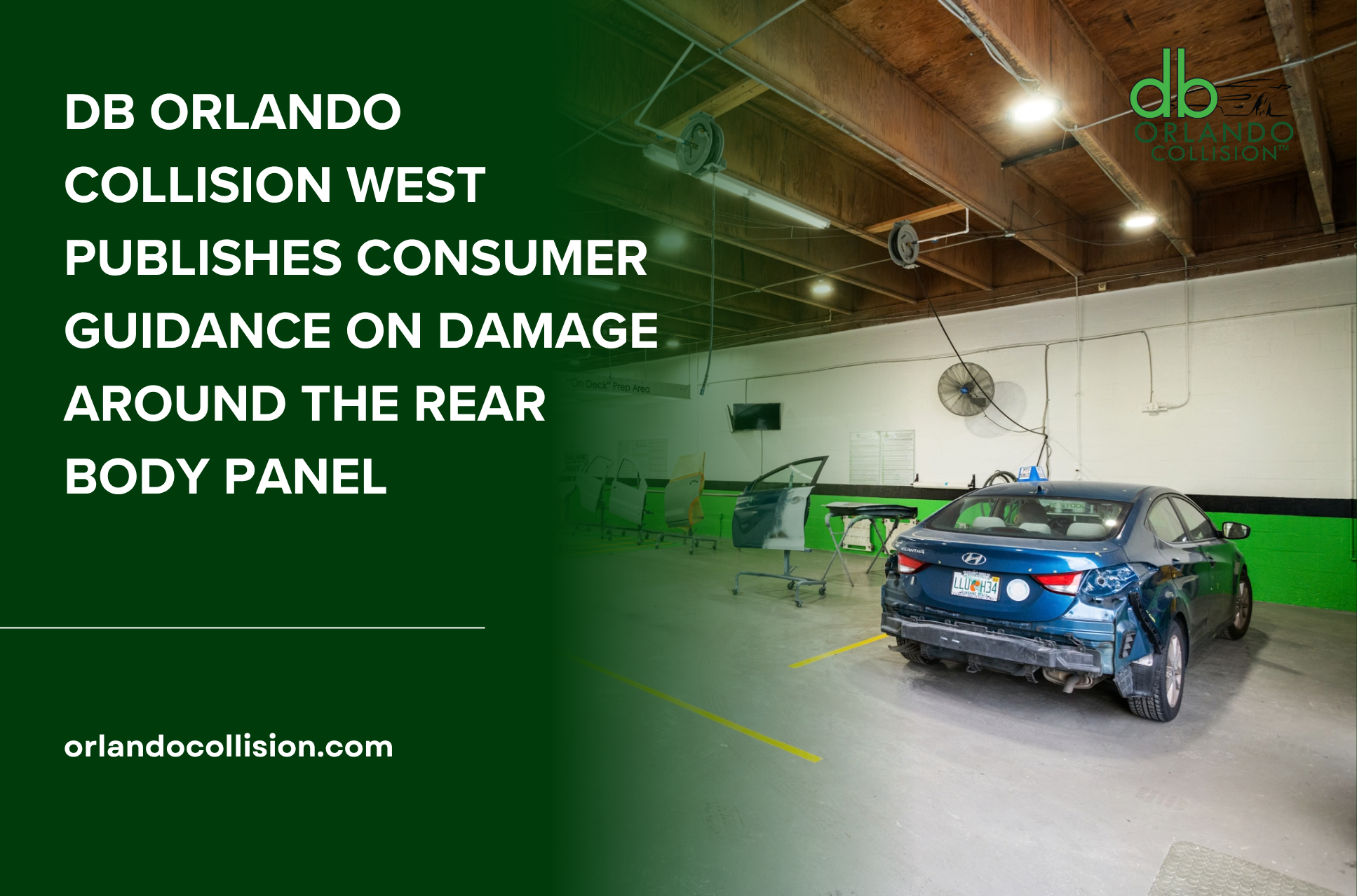
db Orlando Collision West Publishes Consumer Guidance on Damage Around the Rear Body Panel
Orlando, FL - October 21, 2026 - PRESSADVANTAGE - db Orlando Collision West has published a new consumer resource
Press Release Disclaimer: This is a press release distributed through the XPR Media network. It has not been independently verified by our newsroom.

Orlando, FL – October 21, 2026 – PRESSADVANTAGE –
db Orlando Collision West has published a new consumer resource explaining the role of the rear body panel in rear-end collision repair. The resource is designed to help vehicle owners understand where this less-visible body component is located, how it differs from the bumper assembly, and why it may become part of repair planning after certain rear impacts.
The new resource, “Consumer Guidance on Damage Around the Rear Body Panel,” adds a focused topic to db Orlando Collision West’s existing collision repair information. It is intended for drivers reviewing a repair estimate after a rear-end accident, particularly when the estimate includes work beyond the exterior bumper cover.
The rear body panel is generally located across the rear portion of the vehicle behind or adjoining the bumper and trunk or cargo opening. Its design varies by vehicle, but it can be positioned near the rear floor, quarter panels, rear lamps, weather sealing areas, and other adjoining components.
For consumers, the distinction between the bumper and rear body panel is important.
The bumper cover is the exterior component most drivers see after a rear impact. It may show scratches, cracks, dents, or displacement. The rear body panel is a separate body component positioned farther inside the vehicle.
Damage to one does not automatically establish damage to the other.
The new resource explains that repair planning starts with the actual collision area. Technicians can document visible damage and determine whether additional access is appropriate for evaluating components associated with the impact.
When an exterior component prevents technicians from viewing an area relevant to the collision, removal during repair planning can provide additional access. The resulting findings can then be incorporated into the repair plan.
This process can also explain why a collision estimate sometimes changes after repairs begin. An initial estimate reflects the conditions that can reasonably be identified during the first evaluation. If additional collision-related damage is documented after access is gained, the estimate can be updated to reflect the confirmed repair needs.
The consumer resource also addresses the relationship between the rear body panel and the trunk or cargo opening.
A trunk lid or liftgate is designed to fit within the surrounding body opening. Following a rear impact, technicians can evaluate relevant component positioning, panel relationships, attachment areas, and other conditions associated with the collision.
Rear-corner impacts can involve a different group of components from impacts concentrated near the center of the bumper.
A corner impact may involve the quarter panel, rear lamp, bumper components, cargo opening, or adjoining body areas. The repair evaluation therefore follows the location and direction of the collision rather than treating every rear-end accident as the same type of repair.
Vehicle construction can become particularly important when the rear body panel itself requires repair or replacement.
Rear body panels can differ in material, design, attachment methods, and adjoining components. Manufacturers can also specify different procedures and repair limitations for individual vehicles.
OEM, or Original Equipment Manufacturer, repair information provides vehicle-specific instructions that can help technicians identify how affected components are constructed and how applicable repairs should be performed.
db Orlando Collision West provides additional information about these manufacturer-specific considerations through its OEM certification resource.
When replacement of a rear body panel is part of the repair plan, technicians may need to address more than the visible panel itself. Attachment areas, adjoining components, coatings, sealers, and other materials associated with the vehicle’s construction can become part of the repair process.
The new consumer resource gives drivers context for why this work can differ from simply replacing an exterior bumper cover.
It also explains why repair-versus-replacement decisions can vary between vehicles that appear to have similar damage.
The material and construction of the affected component, the characteristics of the damage, accessibility, and manufacturer repair information can influence the appropriate repair approach.
The rear floor is another area discussed in the resource.
The rear floor forms the lower body area of the trunk or cargo compartment. Portions can be covered by carpeting, trim, storage compartments, or other interior components.
A rear impact does not automatically mean this area is damaged. When collision conditions make the rear floor relevant to the repair, technicians can evaluate the applicable area and document its condition.
The same principle applies to rear lighting.
Rear lamps can be positioned close to the bumper, quarter panels, trunk opening, liftgate, or rear body panel. A collision near these areas can involve the lamp itself, its mounting points, surrounding body components, or electrical connections.
Rather than grouping all of these areas together as rear-end damage, a repair plan can identify the individual components that require attention.
The resource also gives consumers a simplified explanation of measurement during collision repair.
When appropriate for the documented damage, measurements can provide information about the position of affected body areas and their relationship to vehicle-specific specifications.
The presence of a measurement operation does not by itself mean structural damage has been found. It is one method technicians can use to gather information when the collision conditions make it relevant.
Modern vehicle technology can add another consideration.
Depending on the vehicle, the rear bumper and surrounding areas can contain parking sensors, cameras, blind-spot-related equipment, wiring, antennas, or other electronic components.
When the collision or repair operations involve this equipment, technicians can identify whether applicable diagnostic, inspection, calibration, or verification procedures are part of the repair.
These technology-related operations are determined by the individual vehicle and documented repair rather than by the rear impact alone.
This distinction can help consumers interpret a detailed estimate.
A bumper repair, body panel operation, refinishing procedure, electronic diagnostic operation, and calibration procedure can address different aspects of the same collision area. Their appearance on one estimate does not necessarily mean the work is being duplicated.
One of the primary consumer use cases for the new resource is reviewing an estimate that includes a rear body panel line item.
Drivers may already recognize terms such as bumper cover, trunk lid, liftgate, or quarter panel. The rear body panel can be less familiar because much of it is positioned behind exterior components.
The resource gives vehicle owners a basic reference for understanding why that component may appear separately on an estimate.
A second use case involves understanding an estimate supplement.
When additional collision-related damage is confirmed after relevant components are removed, a supplement can document changes to the original repair scope. The new resource explains this process without suggesting that every rear-end collision will produce additional concealed damage.
A third use case involves understanding why similar-looking rear impacts can result in different repairs.
Vehicle construction varies substantially. A component that can be repaired on one vehicle may have different repair limitations on another. Different materials, attachment methods, electronic equipment, and collision conditions can also affect the final repair plan.
The resource is therefore intended to give consumers a practical vocabulary for discussing rear-impact repairs rather than encouraging them to determine the repair method themselves.
Drivers can use it to better distinguish the bumper assembly from the rear body panel, understand why adjoining components may appear on an estimate, and recognize why the initial and final repair scopes can differ when additional documented information becomes available.
db Orlando Collision West’s auto body repair information provides broader context for repairs involving damaged exterior and body components.
The newly published rear body panel resource narrows that broader information to one specific area of rear-impact repair. It explains the component’s location, its relationship with surrounding parts, the role of vehicle-specific construction, and how confirmed findings are incorporated into the repair plan.
db Orlando Collision West provides collision and auto body repair services for Orlando-area vehicle owners at 6359 Edgewater Dr, Orlando, FL 32810, United States. The new October consumer resource is intended to help drivers reviewing rear-end collision estimates better understand rear body panel terminology and why repairs involving this area can differ according to the vehicle, impact, and documented damage.
###
For more information about db Orlando Collision – West, contact the company here:
db Orlando Collision – West
Drew
407-436-6500
Drew@orlandocollision.com
6359 Edgewater Dr, Orlando, FL 32810, United States